Understanding RTP MZPlay Probability than Chasing Guarantees
Many players encounter the term RTP (Return to Player) when exploring online casino games on platforms such as MZPlay. While RTP MZPlay is often associated with slot games and other casino products, it is frequently misunderstood as a tool for predicting short-term results.
Understanding RTP provides a useful starting point for learning a broader concept that applies across gambling: probability. This is particularly valuable for sports betting, where success depends less on fixed game mechanics and more on evaluating information such as team performance, player availability, historical trends, and betting odds. Rather than chasing guarantees, informed bettors benefit from understanding how probability influences different forms of wagering.
What RTP actually means in Casino Games?
By definition, RTP assigns a theoretical portion of total bets that casino games are expected to return to its players for a certain period of time. For example, if a slot game has an RTP of 96%, it theoretically returns $96 for every $100 wagered across millions of spins. The remaining percentage represents the house edge.
The important point is that RTP is not a promise for individual players. A player may experience results that are significantly above or below the RTP during a single session because each spin or game outcome remains random. In fact, there are several factors help explain RTP correctly:
- It does not predict the outcome of the next spin or round.
- Short-term results are driven by randomness.
- Different games can have different RTP values and volatility levels.
Recognizing these limitations prevents common misconceptions, such as believing a game is “due” to pay out after a series of losses. Random outcomes remain independent, regardless of previous results.
Why Sports Betting is Fundamentally Different?
Although both casino gaming and sports betting involve uncertainty, they rely on different underlying principles. Casino games operate using predefined mathematical rules and random number generation. Sports betting, on the other hand, depends on real-world events influenced by human performance and changing circumstances. The outcome of a football match, tennis tournament, or basketball game is affected by factors that extend far beyond probability alone. Successful sports bettors often evaluate information such as:
- Team and player statistics
- Injuries and suspensions
- Recent form
- Tactical matchups
- Home and away performance
- Weather conditions
- Historical head-to-head results
Odds offered by sportsbooks reflect estimated probabilities while also incorporating a margin for the bookmaker. Because new information becomes available before an event begins, betting markets continually adjust to reflect changing expectations.
Unlike RTP, there is no single percentage that defines the expected return of sports betting over time. Every wager represents a separate assessment of probability based on available information.
Probability matters more than Predictions
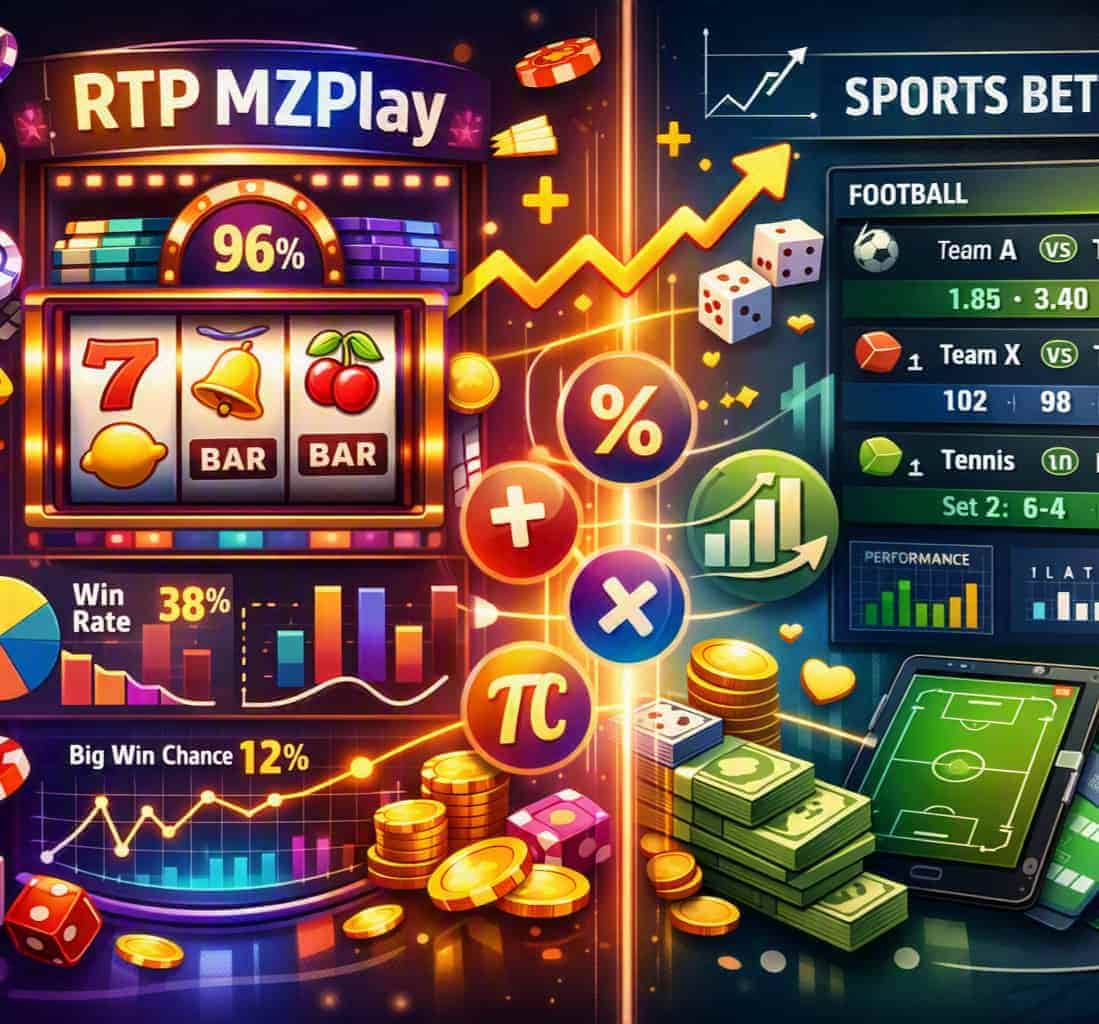
One of the most valuable lessons RTP teaches is that gambling outcomes should be viewed through the lens of probability rather than certainty.
In sports betting, probability helps bettors estimate whether the odds offered by a sportsbook accurately reflect the likelihood of an event occurring. This process involves comparing personal analysis with the implied probability contained in betting odds.
For example, a bettor might believe a football team has a stronger chance of winning than the market currently suggests because of favorable tactical matchups or key player returns. Whether that assessment proves correct is never guaranteed, but the decision is based on evaluating probabilities rather than expecting certainty.
This mindset differs significantly from attempting to predict outcomes with complete confidence. Even well-researched bets lose because sports contain unpredictable elements such as:
- Unexpected injuries
- Referee decisions
- Weather changes
- Individual mistakes
- Exceptional individual performances
Understanding probability encourages realistic expectations. No strategy eliminates uncertainty, but informed analysis can support more disciplined decision-making over time.
Why Chasing Guarantees often Leads to Poor Decisions?
One of the most common mistakes in gambling is searching for guaranteed wins. Whether someone misunderstands RTP or believes a betting system can consistently predict sports results, the desire for certainty often leads to poor decisions, and some examples include:
- Increasing wager sizes to recover previous losses.
- Assuming a losing streak means a win is imminent.
- Following unsupported betting systems that promise guaranteed profits.
- Ignoring changing information before placing wagers.
Responsible betting strategies instead emphasize planning and discipline. This may include setting spending limits, maintaining consistent bankroll management, researching events before placing wagers, and accepting that losses are a normal part of gambling activities.
Viewing gambling through a probability-based framework also helps reduce emotional decision-making.
Rather than reacting to individual wins or losses, disciplined bettors focus on making informed choices using available information.
Building Better Betting Habits through Statistical Thinking
Understanding RTP provides more than knowledge about casino games, it introduces an important statistical concept that applies across many forms of gambling. RTP demonstrates that long-term mathematical expectations differ from short-term outcomes. Sports betting extends that lesson by showing how probability, research, and real-world analysis influence wagering decisions.
Neither casino games nor sports betting offer guaranteed results. Casino outcomes are governed by randomness within established mathematical frameworks, while sports betting depends on constantly changing variables that affect competitive events. Appreciating these differences helps bettors avoid common misconceptions and make more informed decisions.